Popular Posts

Showing posts with label Queen Victoria. Show all posts

Succession Series: Born to Be King?

(For background on this series, click here.)

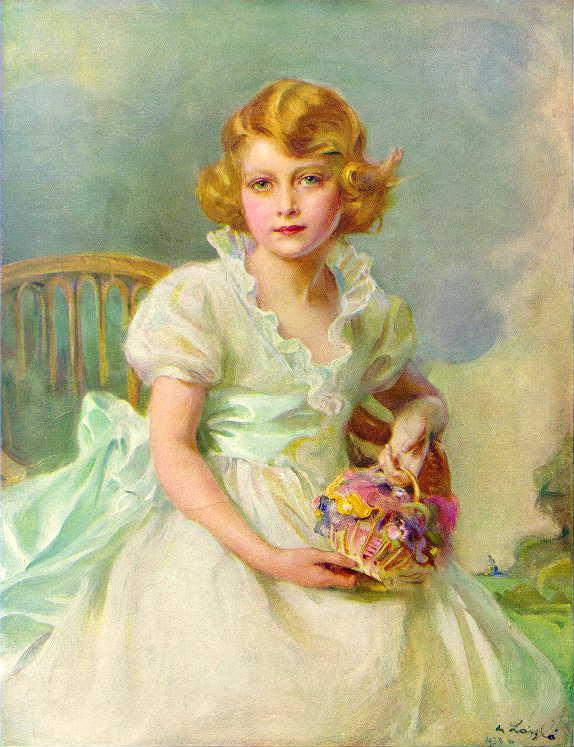
Princess Elizabeth of York was the world’s darling from the moment of her birth in 1926. She was an instant celebrity gracing the covers of magazines with photos of her released at regular intervals. Stories about her seemed to enchant people. How did she dress? What were her favorite toys? How did she turn the gruff old King George V into a tiny girl’s playmate?

Despite this fascination, absolutely no one dreamed she would one day become queen. She was born #3 in the line of succession after her father, Albert Duke of York, and his older brother, Edward Prince of Wales. It was expected that the charming, thirty-something Prince of Wales would marry and beget more heirs. Furthermore, the Duke and Duchess of York would probably have a large family (he had six siblings; she had nine), some of whom would surely be boys who would supplant their older sister.

It seemed that the delightfully celebrated little Princess Elizabeth was destined to grow up as a cadet member of the royal family, probably living a comfortable and pleasant life in the country with her horses and dogs.

Fate, however, intervened.

First, her parents had only one more child, another little princess. Then, when Elizabeth was nine years old, her beloved “Grandpapa England” died. Her now forty-something uncle became king. Since he was still a bachelor, Elizabeth moved up to #2 in the succession. Elizabeth’s darling uncle was spending less and less time with her, but it wasn’t the duties of kingship keeping him away; it was his growing obsession with his married mistress Wallis Simpson. By the end of the year, he had decided that Wallis was more important to him than the throne. He abdicated, Elizabeth’s dad became King George VI, and little Elizabeth was suddenly and unexpectedly the heir presumptive of the British Empire. Just 16 years later, her father’s premature death made her queen at the tender age of 25.

Since the Act of Settlement in 1701, only nine people were born in the direct line of succession. Only half of them inherited the throne. Additionally, four indirect heirs (including Elizabeth) eventually became monarchs. Here is a breakdown:

DIRECT HEIRS

Frederick Prince of Wales (1707-1751)
Born during the reign of Queen Anne, Frederick was the fourth generation direct heir under the guidelines of the recent Act of Settlement. He was #4 after his father (the future George II), his grandfather (the future George I) and his great-grandmother Electress Sophia of Hanover. Sophia (1630-1714) and her descendants had been selected as the only legal heirs of Queen Anne, who had no surviving children. Sophia died shortly before Anne and so did not inherit the throne. George I decided to leave his seven-year-old grandson in Hanover, which meant Frederick grew up separated from his family. By the time, his father became king in 1727, a deep rift had developed and Frederick was left in Hanover for a while longer. He was eventually allowed to come to England, he got married and he fathered nine children. However, he predeceased his father by nine years and never made it to the throne.

Princess Augusta of Wales (1737-1813)
The first child of Frederick Prince of Wales, Augusta was born at #2 after her father. She would have become queen, if only she had had no brothers. As it was, she remained a direct heir for less than a year, when she was supplanted by her little brother George. More brothers and their descendants pushed her further down the line, falling as low as #18. She was even superseded by her own granddaughter. How is that possible? Augusta’s daughter, Caroline of Brunswick, married her oldest nephew, the Prince of Wales, who was #1. So, their only child, Princess Charlotte Augusta of Wales, was #2. At the time of her death, Augusta had moved back up a couple of spots to #16.

King George III (1738-1820)
As the first son of Frederick Prince of Wales, George took his older sister Augusta’s place at #2. When his father died in 1751, the 13-year-old prince moved to #1 and eventually became king at the age of 22. Despite being quite a moral stickler (or perhaps because of it!), his giant brood was full of rapscallion sons and overprotected daughters. Sadly, the long-lived George descended into mania likely caused by a metabolic disorder called porphyria and spent the last decade of his reign in oblivion isolated from his large family. When his precious granddaughter Princess Charlotte Augusta’s death caused a succession crisis in 1817 and his beloved wife died in 1818, George was completely unaware of either ocurrence.

King George IV (1762-1830)
George was the first of King George III’s plentiful progeny and the first person to be born at #1 since the Act of Settlement. Young George loved dressing well, building elaborate homes and having a rollicking good time with older, particularly married, women. In 1785, he married the twice-widowed Maria Fitzherbert. This secret marriage invalidated his claim to the throne because not only lacked the he did not have the king’s permission, but Maria was a Catholic. By 1795, George's debts were massive; unaware of the illegal wife, the king agreed to pay George's debts if he married. So, he married his first cousin, Princess Caroline of Brunswick. In a reaction more violent than when Henry VIII met his “Flanders mare”, the two instantly hated each other, but they miraculously had one child, Princess Charlotte Augusta, exactly nine months after their wedding. George spent the next 22 years trying to get rid of Caroline and even locked her out of his coronation in 1820. He reigned for 10 years. Technically, his bigamous second marriage was also invalid.

Princess Charlotte Augusta of Wales (1996-1817)
Princess Charlotte Augusta was the “People’s Princess” of her day. Born at #2 to warring parents, she spent her childhood living in her own household often ignored by both of them and at other times being used as a weapon in their battle with each other. Although hoydenish, Charlotte Augusta’s youth, beauty and unaffected manner set her apart from her dissolute father and his equally disreputable brothers in the minds of the people. She gained even more popularity when she refused to marry the man her father selected because the marriage would require her to live outside of England. When she enacted a kind of reverse fairytale by marrying a man of her own choosing, Charlotte Augusta sealed her position in the hearts of the people. Her death in childbirth devastated the nation and caused a succession crisis. Suddenly, her middle-aged uncles were on the hunt for royal brides, dreaming of capturing the crown for themselves. Charlotte remained #2 throughout her entire life. [Read more about Charlotte Augusta]

Princess Victoria The Princess Royal (1840-1901)
Once the dynastic dust settled after Princess Charlotte Augusta’s death, a young Queen Victoria married and started her own family. Her first child was a bright and beautiful girl whom she named for herself. Vicky was born #1 and is the only person born #1 who did not ascend the throne; she was supplanted by a brother less than a year after her birth. A princessly prodigy, Vicky was the beloved favorite child of her father Prince Albert, far surpassing the heir who never managed to live up to his parents’ expectations. Like the current queen, Vicky fell in love when she was just an adolescent. At 17, she was allowed to marry her sweetheart and the two remained practically inseparable until his death in 1888. Vicky survived another 13 years, but was too ill with cancer to travel to England for the death and funeral of her mother in 1901. She died later that year. After numerous brothers who had numerous children and grandchildren, Vicky had fallen from #1 to #28.

King Edward VII (1841-1910)
Queen Victoria’s firstborn son displaced his older sister at #1. Named Albert Edward in honor of his father and grandfather. He was not clever like his older sister and he got into some adolescent romantic entanglements, which led both of his parents to conclude that he was morally lax. When an already-ill Prince Albert traveled in terrible weather to chastise the prince for one of these peccadilloes, he contracted a fatal illness and died at the age of 43. Queen Victoria blamed her son. For the next four decades, she denied him any responsibilities, leaving the fun-loving prince with no useful occupation. By the time he became king in 1901 at the age of almost 60, his fast-living ways had likely taken their toll. Opting not to use his father’s name, (I wonder why—hmmm?) he reigned as King Edward VII for only nine years.

Prince Albert Victor The Duke of Clarence (1864-1892)
Prince Albert Victor was the first child of the future King Edward VII. Born at #2, he was everything Victoria and Albert had feared his father was. Albert Victor’s tutors were unable to teach him anything and his service in the navy and then the army yielded no achievements. Even more inclined to fast living than his father, Albert Victor rutted in dissipation, likely contracting venereal disease and even being one of the suspects for Jack the Ripper, which is highly unlikely. All that the prince had going for him was his good lucks and amiable charm. When a royal bride was found for him, he obligingly fell in love and proposed. Weeks later, however, he died from pneumonia just days after his 28th birthday. [Read more about Albert Victor]

King Edward VIII (1894-1972)
Born at #3 behind his father, the future King George V, and his grandfather, the future, King Edward VII, Prince Edward was handsome and charming. Dispatched on numerous international tours, he attracted huge crowds and the newfangled newsreel cameras everywhere he went. There was even a song written about him called, “I Danced with a Man Who Danced with the Prince of Wales.” Behind the scenes, however, he was not a happy person. He really did not like the formality of being royal and the limitations it placed upon him. He also enjoyed spending time with married ladies, indulging in a series of affairs kept secret from his adoring public. Meanwhile, the media constantly speculated about which princess he would marry. His father grew increasingly distraught, famously and accurately predicting that after his own death, the prince would ruin himself in a year. Once he became king in January 1936, he decided he would marry his married mistress Wallis Simpson. The British press had kept the affair quiet, so when the news broke, the nation was stunned. Almost as soon as they heard about it, the king abdicated. It was December 1936. Now The Duke of Windsor, he married Wallis and they lived among the international jetset. He died in 1972.


INDIRECT HEIRS

Three eventual monarchs were not born directly in the line of succession. Two of them were younger brothers of the direct heir and two of them, including the current queen (described above) were nieces.

King William IV (1765-1837)
Born at #3, William The Duke of Clarence was the third son of King George III. After joining the navy, he settled down with his mistress and they had 10 children. In the meantime, William’s two older brothers had each married princesses but only had one child between them, Princess Charlotte Augusta. When she died, it was clear that the now 52-year-old sailor prince would eventually become king. He found a royal bride, Princess Adelaide of Saxe-Meinengen, who was exactly half his age. Having fathered so many children already, William undoubtedly expected to have numerous royal heirs of his own, but none of Adelaide's children lived. When he ascended the throne in 1830, he accepted his next brother the late Duke of Kent’s only child, Princess Victoria, as his heir. However, he feared dying before the little girl reached 18--he wanted her to rule in her own right instead of under her mother’s regency. Stubborn until the end, he lived just long enough, dying a month after Victoria’s eighteenth birthday.

Queen Victoria (1819-1901)
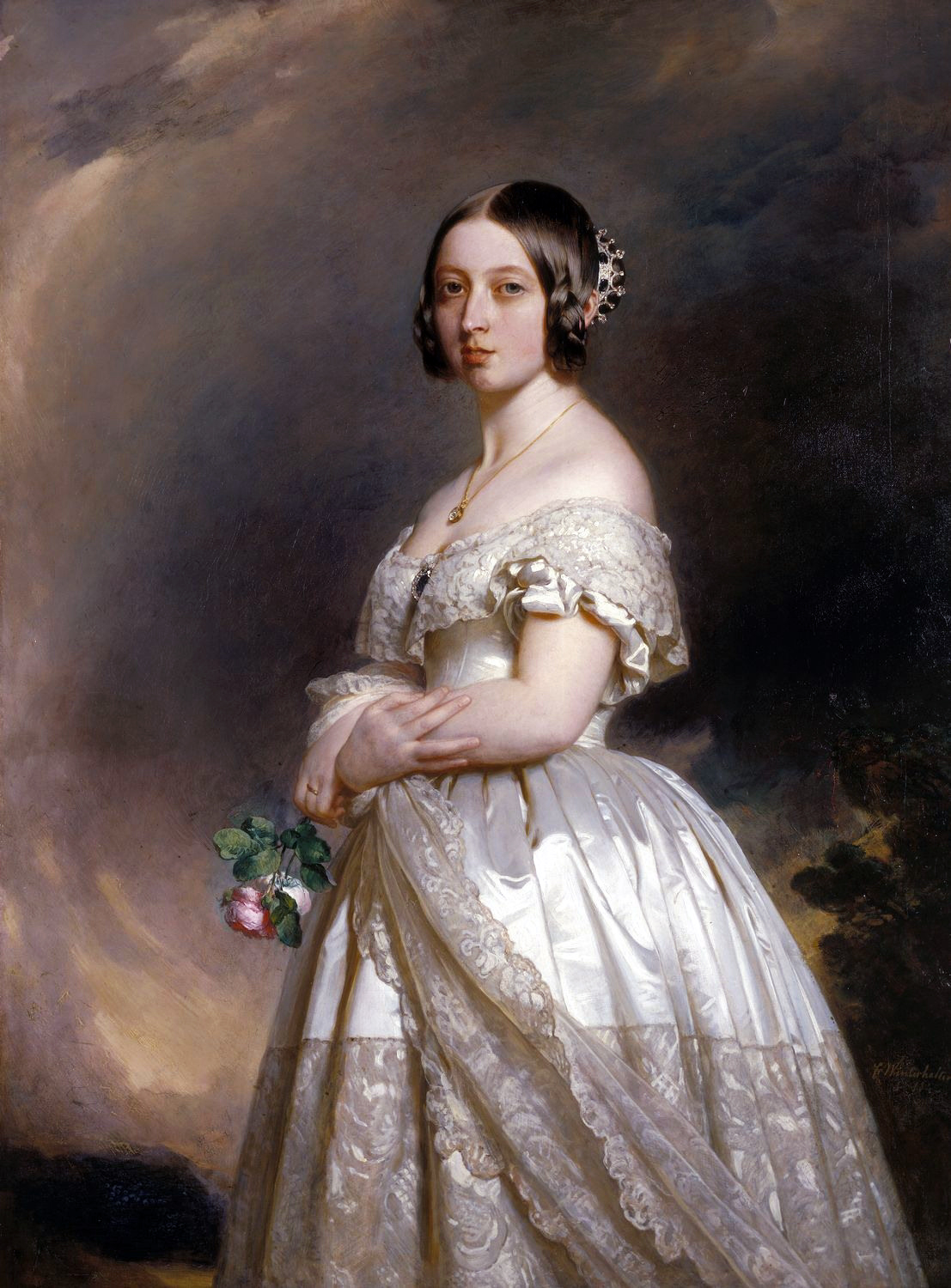
When King George III’s only legitimate grandchild unexpectedly died in 1817, the old king’s unmarried, middle-aged sons acquired royal wives and started trying for an heir. [Read about the Royal Baby Race] Son number four, Edward The Duke of Kent and his new wife had Victoria 12 months after the wedding. She was #5 and it seemed unlikely they she would eventually ascend the throne: both her Uncle William and her father would probably have a son who would supplant her. But, her father died before her first birthday and Uncle William had no surviving legitimate children. Victoria became queen at 18 and soon embarked, although unintentionally, on creating a huge dynast. Although she repeatedly said she didn’t want a large, she also famously enjoyed her husband’s “company.” The first of their nine children was born ten months after the wedding. When she died in 1901, she was the head of a family that included more than 70 living descendents

George V (1865-1936)
The second son of the future King Edward VII, George was born #3. The good-natured George was believed to have a positive effect on his charming but slow-witted older brother, Prince Albert Victor. So, whatever Albert Victor did, George was sent along too—including being placed in the navy when he was only 10 years old. Fortunately, George adored his older brother and he made a pretty good navy officer. George never had the slightest thought about being king one day. His world changed forever when Albert Victor died in 1894. George was named The Duke of York and encouraged to marry his late brother’s fiancĂ©e, which he did. Sixteen years later, he was kept his. George lived until 1936, devoted to his wife, his family, his nation and his stamp collection.

George VI (1894-1952)
Born on the anniversary of his great-grandfather’s death, Prince Albert Frederick Arthur George was the second son of the future King George V. He was #4 following his grandfather, father and older brother. Instead of seeing his unfortunate birthday in a negative light, Queen Victoria surprised everyone by declaring that it was a blessing for him. It’s unclear whether she was right. Bertie, as he was called, developed severe digestive problems following years of abuse by a nanny. He also suffered from knock knees, which were corrected by years of wearing painful metal braces. These two circumstances combined with emotionally distant parents likely contributed to his famous stammer. Bertie was no one’s idea of a king. When it became clear that his brother, King Edward VIII, was going to abandon the throne, some even speculated that Bertie and his daughters might be passed over in favor of one of his younger brothers. But Bertie had an unshakeable sense of duty. Upon his accession, he chose to use the last of his names in honor of his late father. Throughout World War II, he and his young family were symbols of stability and continuity. Unfortunately, Bertie exacerbated his lifelong ill health heavy smoking heavily, which led directly to his death in his mid-50s.

Go to Succession Series index

Where the marriage should take place . . .

There can't be many families who have embarked on wedding planning without having, at the very least, a heated debate about some aspect of the Big Day. The venue is often the trickiest decision, simply because it is often hard to book the place of your dreams. This is obviously not such a problem if you are marrying into the royal family.


In 1858 Queen Victoria's eldest daughter, Vicky, the Princess Royal, married Prince Frederick William of Prussia. They had been engaged for two years, since the princess was 14, a relationship cemented in the heather at Balmoral where the 24 year-old Fritz had proposed. Victoria was delighted because the young couple obviously cared for each other (and we must brush aside modern concerns about the wisdom of encouraging your 14-year-old’s relationship with a man ten years her senior). Conveniently, their union also fulfilled a useful political purpose in the wake of the Crimean War, uniting Britain and Prussia against misplaced Russian ambitions in Europe.


Punch Magazine composed a patriotic ode to the happy couple.


Victoria and Albert were determined that the wedding could not take place before Vicky was 17, so their engagement was a long, and for a while, secret one. Early in 1856, rumours of the union appeared in the press, however, and neither English nor Prussian commentators were overwhelmed with happiness at the prospect. The Times sniffly dismissed the Prussian royal family as ‘a paltry German dynasty’. The official announcement did not occur until May 1857, at which point the Prussians issued the ultimate insult, by suggesting that the marriage take place in Berlin. Lytton Strachey, the Queen’s biographer, noted that the Queen was ‘speechless with indignation.’


On paper, however, she let rip, emphatically, imperiously, and slightly hysterically. She asked the Foreign Secretary, Lord Clarendon, to inform the German Ambassador


‘not to ENTERTAIN the POSSIBILITY of such a question . . . The Queen NEVER could consent to it, both for public and for private reasons, and the assumption of its being TOO MUCH for a Prince Royal of Prussia to come over to marry the Princess Royal of Great Britain IN England is too ABSURD to say the least. The Queen must say that there never was even the shadow of a doubt on Prince Frederick William's part, as to where the marriage should take place. . . .Whatever may be the usual practice of Prussian Princes, it is not EVERY day that one marries the eldest daughter of the Queen of England. The question must be considered as settled and closed.’


And that was that. The wedding took place on 25th January 1858 in the comparatively small Chapel Royal of St James Palace, but it was accompanied by great public festivities – illuminations, state concerts, immense crowds and general rejoicings. Incidentally, the bride and bridegroom left the church to a glorious, but then little-known recessional, Opus 61, by the German composer Felix Mendelssohn. Since Vicky’s nuptials, it has become known as the ‘Wedding March’ and few weddings are complete without it.

Queen Victoria as a Child

Her Royal Highness Princess Victoria (1819 - 1901) aged four years.  Original Artwork: Lithograph by S P Denning   (Photo by Hulton Archive/Getty Images)
In response to search queries, here is a little tidbit about Queen Victoria as a child. Born in 1819, she was the only daughter of King George III's fourth son, the Duke of Kent. Her father died when she was an infant and she was raised at Kensington Palace by her German mother, who did not get along well with the royal British in-laws.

Through a series of tragically young deaths among her cousins, Victoria succeeded her uncles George IV and William IV when she was barely 18 years old. (Read my post about the "Royal Baby Race" at the Unoffical Royalty Site.)
1821:  Victoria, the Duchess of Kent with her three year old daughter, Princess Alexandrina Victoria, later Queen Victoria of Great Britain. The young princess carries a miniature of her dead father,  Edward, Duke of Kent. Original Artwork: Engraving after Sir William Beechey (1753-1839)  (Photo by Hulton Archive/Getty Images)

Question: The Christening of Victoria, The Princess Royal Painting

My grandfather has a beautiful painting of Queen' Victoria's christening (1841) and born in 1840. I am trying to find a list of people who attended the event so I can pin point who is in the painting.

The painting that your grandfather has is a reproduction of a work called The Christening of Victoria, The Princess Royal by Charles Robert Leslie. The original, an oil on canvas measuring 129.5 x 182.9 cm, is in The Royal Collection.

The Princess, who was born on November 21, 1840, was christened on her parent's first wedding anniversary, February 10, 1841. The christening robe that she wears is made from Honiton lace and white satin and was worn by all royal babies until 2008, when it was retired due to its age and fragile state. The baptismal lily font was commissioned by Queen Victoria. Made of Silver gilt, and measuring by height 43 cm; and diameter 43 cm, it is one of only two silver English fonts. The font is in the shape of a water lily, supporting a large shell. Inside the rim of the small shell were water lilies floating around the edge and water was specially brought from the River Jordan. The lilies were considered to represent purity and water lilies were associated with new life. This font has been used at all royal christenings since 1841.

Princess Victoria was christened in the Throne Room at Buckingham Palace by William Howley, Archbishop of Canterbury. Her godparents were Leopold, King of the Belgians, Ernst I (her paternal grandfather), he was not present during the event and the Duke of Wellington stood proxy. The other godparents were Prince Augustus, Duke of Sussex (her great-uncle), Dowager Queen Adelaide, widow of King William IV, the Duchess of Gloucester (her great-aunt), and the Duchess of Kent (her grandmother).

The painting commemorating the event depicts, The Dowager Queen Adelaide on the left of the font, who named the child Victoria Adelaide Mary Louisa. Others in the painting include the Duchesses of Gloucester and Kent, King Leopold I of the Belgians, and the Duke of Sussex (all in the group on the left). Queen Victoria and Prince Albert are on the right of the font.
© Marilyn Braun 2010

Royal Focus: The Prince Albert Brooch

401511 18: Britains Queen Elizabeth II smiles at the crowds of well wishers lining the Waitemata Plaza walkway February 26, 2002 in Auckland, New Zealand. The Queen and her husband the Duke of Edinburgh are in New Zealand for six days before travelling to Australia on February 27. (Photo by Dean Treml/Getty Images)

This large oblong sapphire is surrounded by twelve round diamonds. It was given to Queen Victoria by Prince Albert of Saxe-Coburg-Gotha the day before their wedding. For their wedding she wore the brooch with a diamond necklace and earrings and always referred to the jewel as 'Albert's brooch'.

While Prince Albert was alive, Queen Victoria wore it constantly and inexpensive reproductions of it were made for those subjects who wanted to purchase a version of the brooch.  After his death in 1861 she rarely wore it. In her she instructed that it be considered a Crown piece of jewellery, held in trust for all future Queen consorts. Queen Alexandra wore it pinned to her shoulder for her coronation in 1902. Queen Mary wore it often, but Queen Elizabeth, the Queen Mother was rarely seen wearing it. The brooch is a favorite of the present Queen. Prince Albert made copies of the brooch for his daughters and the present Queen gave one of these to her daughter, Princess Anne.

© Marilyn Braun 2010

The Kiss of Death

circa 1860:  Princess Alice Hesse Darmstadt (1843 - 1878), the third daughter of Queen Victoria of England.  (Photo by Hulton Archive/Getty Images)
From the room next door, 18-year-old Princess Alice could hear her beloved father’s ragged and uneven breathing. She had moved her own bed to this chamber so that she could be by his side in seconds whenever he needed her. For two weeks, Alice had been Prince Albert’s chief care giver; mopping his fevered brow, changing his linens, following after him when he was strong enough to take a few steps. Never hearty, Albert was left with little energy or will to fight off typhoid.

Quietly and tenderly, young Alice saw to his every need and, when she heard the death rattle in his throat, she personally went to bring her mother, Queen Victoria, to say good-bye. On Dec. 14, Prince Albert passed away with the loyal Alice at his side. As Victoria lost herself in the dramatic realization of all she had lost, Alice shifted her care to her mother, nursing her through the early, violent stages of a grief that would ultimately last for almost 40 years. Alice also became Victoria’s unofficial secretary for the next several months—until her own wedding, a marriage pre-approved by her late father, took her to her new home in the Grand Duchy of Hesse-Darmstadt in Germany.

Alice quickly started her own family; five daughters and two sons arrived at fairly regular intervals. Unlike her mother, Alice was a natural and devoted mom. She even breastfed her children—much to Victoria’s disgust.

But Alice’s loving-kindness extended well beyond her own family. She began visiting the homes of the poor and offering her assistance, sometimes without her benefactors even knowing who she was. “I feel the want of going about and doing the little good that is in my power,” the newlywed princess wrote home.

Alice actively supported and visited hospitals, often caring for the sick and injured herself. When war pushed its way into Hesse-Darmstadt, she spent the last few days of her third pregnancy making bandages for the wounded. A friend of the famous Florence Nightingale, Alice created an institute to train nurses using Nightingale’s modern nursing techniques.

circa 1870:  Princess Alice Hesse Darmstadt (1843 - 1878), third daughter of Queen Victoria in a typical purple-black Victorian dress.  (Photo by Hulton Archive/Getty Images)
Unafraid to personally nurse soldiers and the most destitute of the poor, Alice naturally waited upon her own children whenever they were ill. When her oldest daughter was stricken with diphtheria, a highly contagious bacterial disease, in early November 1878, Alice automatically looked after her, careful always to avoid personal contact for fear of infection. One by one, each child became ill, except Elizabeth the future martyred saint of the Russian Orthodox Church. Even her husband contracted the dreadful disease. Alice tirelessly nursed them all and, one by one, they each recovered.

Each except the youngest, four-year-old Mary. The swelling in little Mary’s throat and mouth continued to grow until the tiny princess finally suffocated to death on Nov. 15. Her devastated mother barely allowed herself time to grieve as she continued to fight for the rest of her family’s survival. “The pain is beyond words,” she telegraphed to Queen Victoria.
The tragic news was kept from the other patients for a couple of weeks until 10-year-old Prince Louis, now past the worst danger, asked about his little sister. Alice broke the news to him as gently as she could. When the broken-hearted little boy began to cry, Alice hugged him and kissed him tenderly.

It was her last act of kindness. The disease struck the exhausted princess with virulence. On Dec. 14, exactly 17 years after she heard the death rattle in her father’s throat, Alice drew her final breath.

A mournful Victoria, who had sent her own doctor racing to Alice’s side, wrote “that this…sweet child…should be called back to her father on the very anniversary of his death seems almost incredible and most mysterious.”

Ever mindful of that dreadful anniversary, Alice’s last words were, “Dear Papa.” She was 35.

Royal Roots

In recent weeks, I've become entranced with television shows about geneaology. In some of these programs, celebrities trace their heritage and are surprised and delighted to find images and documents related to their ancestors. (Queen Noor of Jordan, born plain old American Lisa Halaby, was stunned to find numerous newspaper articles about her grandfather, a turn-of-the-century immigrant merchant.)

How different it must be for princesses whose royal and aristocratic lineages are documented for generations and generations and generations. I'm sure many of them are proud of their heritage and wish to honor it (witness Princess Beatrice's brief appearance in the recent film "The Young Victoria" about her great-great-great-great grandmother), but I wonder if they are as excited to discover their roots as we ordinary folks.

Just for fun, this week, I thought I'd take you on a photo tour of Queen Elizabeth II's recent ancestors. (Generations 1-5 are wedding day pics!)

Generation 1
Queen Elizabeth II and Prince Philip of Greece (The Duke of Edinburgh)

A Royal Wedding


Generation 2
King George VI and Lady Elizabeth Bowes-Lyon (The Queen Mother)

Marriage To George


Generation 3
King George V and Princess Victoria Mary of Teck (Queen Mary)

Royal Wedding


Generation 4
King Edward VII and Princess Alix of Denmark (Queen Alexandra)

Notice that the mother of the groom, Queen Victoria (seated) is staring at a bust of her late husband.

Victoria And Edward


Generation 5
Queen Victoria and Prince Albert of Saxe-Coburg

Royal Couple


Generation 6
Prince Edward The Duke of Kent and Princess Victoria of Saxe-Coburg

(I'm very conscientious about photo royalties and copyright in general, so apologies for not being able to find a usable image of the Duke but I think getting to see Baby Queen Victoria makes up for it!)

Princess Victoria


Generation 7
King George III

King George III

Darling Baby: Beatrice's Brief Childhood

Princess Beatrice
Nine children is a large family in any age. For Queen Victoria, who had prayed not to have too many children, the arrival of the ninth child might have been a less-than-delightful occasion. And yet, the birth of this child welcomed one of the brightest periods in the marriage of Victoria and her husband, Albert. Two months later, Victoria officially gave Albert the title of “Prince Consort,” finally providing him with an official role in the country he had called home for nearly two decades.

From the moment she arrived, Beatrice Mary Victoria Feodore, or “Baby” as she was usually called, was the darling of the family. Her nearest brother was four years older and her closest sister was nine years older—she was, indeed, the baby of the household and she was indulged in ways that her oldest siblings would never have imagined.

Royal Offspring
Both of her parents adored her. The Queen, who herself admitted that she only liked pretty children, was delighted by Baby’s big blue eyes and tiny mouth. The oldest child, Vicky, remarked that Baby was “quite the prettiest of us all, she is quite like a fairy.” Their father agreed, but also added that she was also “the most amusing baby we have had.”

As with most daddies, he was, of course, prejudiced. He could find humor in even the most annoying of Baby’s behaviors as evidenced when he wrote of the day-old princess’s wailing: “Baby practices her scales like a good prima donna before a performance and has a good voice!”

Albert was a strict father but could also be lovingly indulgent. He was certainly a more natural parent than Victoria. “It is indeed a pity that you find no consolation in the company of your children,” he once wrote to his wife, “. . . It is not possible to be on comfortable terms with people you have just been scolding.”

Baby suffered far less of Mama’s scolding: her big blue eyes and naughty charm earned more laughter than reprimands. Even when the bouncing toddler used the Queen’s apron strings to tie her to her chair, no punishments followed. The youngster was still invited down to tea and encouraged to entertain guests with songs and bits of poetry.

Once, when Baby took too much of a treat, Victoria gently reminded her, “Baby mustn’t have that. It’s not good for Baby.” To which the golden-hair pixie replied, “But she likes it my dear.”

While Beatrice showed none of the fear that characterized the relationships between her siblings and the Queen, her adoration of her father was even more apparent. She was definitely a daddy’s girl. Beatrice was born at just the right moment to earn Albert’s deep affection, for she was able to fill a hole left in his heart by the marriage of his oldest daughter, Vicky. Bright and lovely, Vicky had always been Albert’s favorite. She was more clever than any of her brothers, more lovely than any of her sisters and more responsive to the education Albert had outlined for his children. But, at 17, she was in love with the future German emperor and Albert sadly had to watch her sail away to a new life on the Continent when Beatrice as only nine months old.

Victoria And Albert
Although he corresponded frequently with Vicky, her departure left plenty of time for him to indulge his prettily charming new baby. When Vicky began having children in rapid succession, Albert wrote that these infants should model themselves after their Aunt Beatrice. Baby herself delighted in being an aunt—whenever she was asked to do something she didn’t like, the three-year-old excused herself because she needed to write letters to her niece.

Baby Beatrice started most days by toddling into her father’s dressing room where she would watch him as he shaved. Then, Albert would sing to her in English and his native German and enjoy her own little songs and stories. Later, he would place her on his knee as he played piano or organ, sharing with her a love and talent for music that would be even more pronounced in her than among all of his children, each of whom was musically gifted.

At supper time, Albert would sometimes wrap Beatrice in a large napkin and swing her in the air. Even when she was naughty, he couldn’t help but chuckle at her cleverness. Once, when he scolded her for being troublesome, she replied, “No, Baby’s not. She’s a little girl.”

Each day of Beatrice’s early childhood seemed more golden than the day before: playing in the miniature house Albert had constructed, walking along the seashore of their house at Osborne, having tea with her mother on the family yacht, entertaining her brothers and sisters who rewarded her for reciting words in French.

Then, suddenly, Baby’s world turned upside down. Early in December 1861, Albert became terribly ill with typhoid. By Dec. 6, Victoria was desperate to raise his spirits and help him rally. She led the four-year-old Beatrice to his bedside. The bubbly little girl recounted her latest French verses to him and managed to make him laugh. She kissed him and held his hand for a long time before being led away so that he could rest.

It was the last time she would ever see him.

Princess Beatrice
Eight nights later, the Princess was sleeping peacefully down the hall, when Albert took his final breath. Shocked and horrified, Victoria raced from his deathbed to the room where Albert’s littlest angel lay nestled in innocence, unaware of the family’s grief. Victoria gently lifted Beatrice from her bed, careful not to awaken her, and dashed back to her own room. She wrapped Beatrice in Albert’s nightshirt and placed her in the bed beside herself.

There, the restless and distraught mother awaited a dawn that would forever change her sleeping Baby’s life.

The Royal Report for Sunday March 7, 2010 - Royal Fashions

What do King Edward VII, Queen Alexandra, King Edward VIII, Princess Margaret and Princess Diana have in common? They set fashion trends.

Find out about these leaders of royal fashion by listening to this episode

Publications mentioned

Hello! Canada Weekly No 164 8 March 2010

Majesty Magazine January 2010 Vol 31 No 1

From my royal collection

Royal Style Wars - The trend setting fashion feud between the Princess of Wales and the Duchess of York by Lesley Ebbetts

Resources used to research this episode

Diana The Fashion Princess Davina Hanmer & Tim Graham

Royalty in Vogue by Josephine Ross

The Princess of Wales Fashion Handbook by Sue James

Princess Diana's Maternity Fashion and Nursery Handbook by Sue James

A Family Album by The Duke of Windsor

Diana Style by Colin McDowell

The Windsor Style by Suzy Menkes

Tune in live to the next episode of The Royal Report on Sunday March 14, 2010 at 9:00PM EST (North America)

The topic will be: Royal Jewels

© Marilyn Braun 2010

Royal Profile: Princess Mary Adelaide, Duchess of Teck

The final arrival in the royal marriage race that began with the death of Princess Charlotte in 1817, she was a first cousin of Queen Victoria and the mother of Queen Mary.

Princess Mary Adelaide Wilhelmina Elizabeth, the second daughter of Adolphus, Duke of Cambridge, was born in Hanover on November 27th, 1833. Her father was the youngest and favorite son of King George III and her mother was Princess Augusta, youngest daughter of the Landgrave Frederick of Hesse. Princess Mary was christened on January 9, 1834 and named after her godparents: Mary, Duchess of Gloucester (her father's favorite sister), Queen Adelaide, King William IV, and Princess Elizabeth, the Landgravine of Hesse-Homburg. She had one sister, Princess Augusta and a brother, Prince George, born three days after Queen Victoria.

Her early years were spent at the Viceregal Palace and Villa Montbrilliant. At the age of three she was taken to England with her mother and they stayed at Windsor Castle. William IV was fond of his god-child and gave her a gold chain and locket containing his hair. In 1837 the family moved to England first living in Cambridge House Piccadilly, and then Cambridge Cottage in Kew. Princess Mary Adelaide, her sister Princess Augusta and their parents attended the coronation of Queen Victoria in 1838 and later her wedding in 1840.

At the age of seven she began her education, being taught by a governess at home. She took lessons in Latin, Scripture history, and Italian, along with lessons in dancing, and music. She had a particular interest in history and geography. When she was fourteen, her mother later took over her education. Mary was an excellent mimic, had a beautiful mezzo-soprano voice and enjoyed the opera and theatre. She was tall, with ash-blonde, wavy hair, dark blue eyes and a good complexion. But Mary Adelaide had problems with her size. While she had been a striking child with pretty blonde curls, later on she was known rather unflatteringly as 'Fat Mary' or 'Mary the mountain' yet despite her size she moved with a natural grace. She was confirmed on December 19, 1850.

She spent her childhood days at Kew. Her father died in 1850 when she was seventeen-years-old. She and her mother moved from Cambridge Cottage to St. James Palace. At the time it was thought that she should find a husband of wealth and standing. Queen Victoria, intrigued by match-making, joined in the hunt. Her suitors were restricted to the royal blood, and members of the British aristocracy were not considered.

In 1866, through Bertie and Alexandra (the future King Edward VII and Queen Alexandra) she met Prince Francis of Teck - as a serene highness he was of lower rank, four years younger and had no money. But he was of royal rank and on April 6th they became engaged during a stroll in the Rhododendron Walk in Kew Gardens. The couple were married on June 12, 1866 in the little church on Kew Green and the newlyweds were given the apartments at Kensington Palace that Queen Victoria had lived in as a child. Their first child, the future Queen Mary was born on May 26th, 1867, in the same room that Queen Victoria herself had been born. They had three more children - Adolphus (Dolly) on August 13, 1868, Francis (Frank) on January 9, 1870 and Alexander (Alge) on April 14th, 1874.

Mary Adelaide inherited the trait of her 'wicked uncles' the sons of George III. Money had no meaning to her and she believed the the British public should support its royals. She was generous beyond her means in the field of charity, her main extravagance was entertaining. To avoid her creditors, in 1883 she and her family fled to Florence Italy. They returned in 1885 and she managed to get permission to have White Lodge, a grace and favor residence in Richmond Park, as a rural retreat.

In 1891 her daughter Princess Mary became engaged to Prince Albert Victor . Shortly before their wedding he died and a year later she became engaged to his brother, Prince George, the future King George V.

Princess Mary Adelaide died 27 October 1897 at White Lodge, Richmond Park, Surrey, and was buried in the royal vault at St. George's Chapel, Windsor.

© Marilyn Braun 2009

Royal Review: The Young Victoria

I'll admit. Were it not for Sarah Ferguson's, (Duchess of York) involvement in this film I would have more than likely dismissed it as just another straight to DVD royal movie. Nice to eventually loan from the library but not something I would rush out to see otherwise.

However, with Sarah Ferguson's involvement I was somewhat intrigued by the idea. When I think of Queen Victoria I think of her later in life: the mournful, unsmiling, imposing, matriarch of a large extended inter-married royal family. I don't think of her as young, passionate and inexperienced. I also don't think of her as beautiful when portraits of her were said to be far more flattering than what she actually looked like in person.

Covering the period of her early teens and touching on the death of Prince Albert (sorry if I've given away the ending) The Young Victoria shows a princess under the thumb of her mother and advisor Sir John Conroy who want Victoria to sign a regency on her sickbed to put her mother in charge and Conroy the power behind the throne. However, Victoria is no docile princess. She is spirited and defiant and once she becomes Queen, Conroy and her mother are immediately jettisoned from her court.

But they're not the only ones with an agenda as politicians dismiss Victoria as too young and inexperienced, and Lord Melborne portraying himself as her protector and confidant. Then there's the King of the Belgians desire to infiltrate the court via his nephew, Prince Albert of Saxe-Coburg-Gotha. Yet while Prince Albert initially does what's required of him, no one predicted that the new Queen and Prince Albert would actually develop feelings for each other. This makes those with agendas jealous, especially when the couple's loyalty to one another excludes them.

Although they are passionate, they are not without their disagreements. As Prince Albert struggles to find a meaningful role, Victoria becomes threatened by any interference to her power. After this fight, the couple go for a carriage ride and an assassination attempt is made on Victoria. Albert shields her with his body and is shot, suffering grievous injuries. He survives and Victoria realizes how important Albert is to her and gives him a more important role, illustrated by moving his desk next to hers and jettisoning her longtime servant and confidant, Baroness Lehzen.

Emily Blunt, (The Devil Wears Prada) portrays Queen Victoria in the bloom of her youth, as human and passionate - two qualities you wouldn't normally associate with her. Prince Albert is portrayed by the handsome Rupert Friend. Like Victoria, his looks may not be historically accurate, but using such photogenic actors makes their passion much more convincing. Mark Strong plays the glowering Sir John Conroy, Jim Broadbent is wonderful, hamming it up as Victoria's uncle, King William IV, Paul Bettany plays the charming, paternal and influential Lord Melborne and Victoria's great-great-great-great granddaughter Princess Beatrice has a minor cameo during the coronation scene.

Ultimately this film offers no great revelations but it's enjoyable and a good movie to watch if you'd like to see a side of Queen Victoria that most of us may be unfamiliar with.

© Marilyn Braun 2009

Victoria’s Secrets: 10 Things You Don’t Know About the Famous Queen

Golden Jubilee
She’s so famous they named an entire age for her. Towns, provinces, lakes, waterfalls, etc., etc. around the globe (in Africa, Asia, Australia and the Americas!) were given her name. The popular conception of Victoria is that of a staid, matronly old lady who was stubborn and, perhaps, a bit of a prude. These things may all be true—in part—but the real Victoria was also lively and not quite as immune to temptations of the flesh as she might have history believe. Here are ten things you might not know about one of the most famous women in history.

1. Victoria was raised by a single mother.
Victoria’s father, the Duke of Kent, died when she was only eight months old. She was raised, therefore, by her German mother, Victoria of Saxe-Coburg. She was the only child of the Duke although his Duchess had two other children, Charles and Feodora, by her first husband. The elder Victoria was only 17 when her family married her to Charles Prince of Leinengen, who was 23 years older . She became a widow for the first time at 27. When she married the Duke, 19 years her senior, she was overseeing a small German principality on behalf of her young son. After the Duke’s death, she remained in England, although she received little support from the royal family or the government. In fact, she feuded with her brother-in-law, King William IV, and grew increasingly paranoid that her daughter’s life was in danger from the royal family. It was not a pleasant environment for a lonely young girl. Queen Victoria later wrote that, in her childhood, she “did not know what a happy domestic life was.” As soon as she became queen, she made sure that her mother had no authority.

2. She became queen through multiple tragedies.
The Duke of Kent was the fourth son of King George III. All three of his elder brothers should have had many children who would have been ahead of Victoria in line to the throne. (See “The Royal Baby Race”) The eldest brother, the Prince of Wales (later George IV), hated his wife and only managed to have one child, Princess Charlotte, who died after giving birth to a stillborn son. The Duke of York also was not fond of his wife and they had no children. The Duke of Clarence (later William IV) had 10 little FitzClarences by Mrs. Jordan but his two daughters by his wife died as infants. All of these barren marriages and premature deaths left the path clear for the Duke of Kent. Then, his own premature death from pneumonia secured the throne for his infant daughter. Had he lived longer, he might have fathered sons who would have taken precedence over their older sister in the line of succession. In all, eight people had to die for her to become Queen.

3. Her name wasn’t Victoria.
When she was born, the Prince of Wales was serving as Regent for his father, “mad” King George III. The Regent wasn’t particularly excited about the Duke of Kent’s new child. Recently bereaved by the death of his only daughter and grandchild, he also did not think the Kent child had a chance of succeeding to the throne. He, therefore, was less than thrilled when the parents proposed the rather grandiose name of Georgiana Charlotte Augusta Alexandrina Victoria (after, respectively, the Regent, his dead daughter, one of his sisters, the Emperor of Russia, and the baby’s mother.) As nominal head of the family, he delayed the baby’s christening and refused to allow the proposed name. During the christening, the Archbishop of Canterbury had to ask (with rather more urgency than usual) what the baby would be called. “Alexandrina,” the Regent responded petulantly. The Duke of Kent asked whether she might have a second name, perhaps Elizabeth. The Regent finally allowed her to be named for mother, but only if Victoria came after the Emperor’s name. So, Queen Victoria was called “Drina” as a child and Alexandrina remained her official name until she herself insisted on Victoria.

4. Victoria inherited the throne in her nightie.
At barely 18 years old, Princess Victoria of Kent was awakened at about six o’clock in the morning. Knowing the news she was about to receive—her uncle King William IV’s illness had been no secret—she put on her housecoat and met alone with the Lord Chamberlain and the Archbishop of Canterbury. Despite her extremely casual attire and her tender years, the new Queen quickly asserted herself. She refused to allow her mother to accompany her, she met that day with the Prime Minister and with the Privy Council unattended by any female chaperone, in contrast to the standards of the day. Barely five-foot tall with a tiny, bell-like voice, the new Queen was rapidly establishing herself as a giant among the men of the day.

5. Victoria married her first cousin.
The closest father figure in Victoria’s childhood was her maternal uncle, Prince Leopold of Saxe-Coburg, who was also the widower of her tragic cousin, Charlotte, the Regent’s daughter. Leopold had a keen interest in Victoria’s advancement, seeing himself as a protector of her claims to the throne that should have gone to his own child. Even after securing another throne for himself—as the first King of the new Kingdom of Belgium—Leopold maintained a strong influence on the young Victoria. He decided that the Coburgs should try to keep the British throne in their family and advocated a marriage between his sister’s daughter, Victoria, and his brother’s son, Albert. At first, 17-year-old Victoria was not impressed with 16-year-old Albert. However, she soon changed her mind. She wrote to Albert’s father, her Uncle Ernest, that Albert, “possessed every quality” to make her “perfectly happy.” Two years later, after becoming queen, she proposed to Albert, whom she found “beautiful” and “fascinating.” The arranged marriage became a devoted love match.

6. Victoria enjoyed her sex life. . .
From the moment of her engagement, Victoria indulged in kissing Albert “again and again.” She not only relied on Albert’s advice in their public lives together, and promoted nearly any project or plan he proposed, but she also enjoyed a quite intense physical relationship him. At a time when many young married women were admonished to endure their marital duty (“close your eyes and think of England”), Victoria clearly did not have to rely on patriotism to inspire her in the bedroom. When the death of his father required Albert to return briefly to Germany without her, Victoria bemoaned her uncomfortably chaste state to their Uncle Leopold, saying the thought of being separated for even one night was “quite dreadful.” Even more bluntly, she later wrote her oldest daughter about being “clasped and held tight in the sacred Hours at Night when the world seemed only to be ourselves.” Imagine your own mother saying that!

7. But not the consequences.
Despite her chemistry with Albert, Victoria was openly unhappy to find herself pregnant again and again and again. She had hoped to have a few years alone with her handsome husband, but their first child was born barely nine months after the wedding and the second just 12 months after that. By their 17th anniversary, the couple had nine children. While Albert proved an attentive father, in many ways the opposite of the stereotypical Victorian father, Victoria was not a natural mother. She did not like infants and even wrote that two of her babies were “too frightful.” She wrote that “as a rule children are a bitter disappointment.” Even as a grandmother, she could be less than affectionate; after the birth of her fourteenth grandchild, she wrote that the birth of yet another “little red lump” was “a very uninteresting thing.” She later clarified that she admired “pretty children” although she did not like to have too many around her. Early in her marriage, she had written that a large family would be “a hardship and inconvenience”—an insightful statement from the mother of nine and grandmother of 42.

8. Victoria was a single mother.
Alas, one of the reasons she was so burdened by her maternal role, or so she said, was because she had to head such a huge family entirely alone. Like her mother before her, Victoria became a single mother; Albert died of typhoid at a tragically young age. Only 42 at the time, Victoria still had seven children at a home, aged four to 18. Her eldest daughter was married and living in Germany. Her eldest son, Bertie, was in college. In fact, she blamed Bertie for Albert’s death, believing that his fatal illness had been contracted when he rushed to Cambridge to chastise Bertie for a sexual indiscretion. Although Albert had been ill for some time prior to this and had been involved in other stressful activities—including his successful intervention in the Trent Affair of the American Civil War—Victoria never forgave their eldest son. She also clung to her youngest child, Beatrice, allowing her to marry only when the prospective bridegroom agreed to live with his mother-in-law for the rest of her life.

9. She was the grandmother of Europe.
By the time Victoria died in 1901, she had 96 descendants, some of whom had predeceased her. Among her children and grandchildren were the crowned heads of England, Germany, Greece, Norway, Russia, Rumania, Spain and Sweden. All of the current monarchs in Europe are descended from her except the Queen of the Netherlands and the King of the Belgians. As of September 1, 2009, according to the Monarchies of Europe website, there have been 1,053 descendants of Queen Victoria, including 828 who are still living. The number would be even higher except that many cousins married cousins. In fact, Queen Elizabeth II and her husband Prince Philip are both her great-great grandchildren. She is descended through Victoria’s oldest son and he through her second daughter.

10. We’ll never know all of her secrets.
Although Victoria was a prolific writer, (it is estimated she wrote 60 million words!) documenting her long life through thousands of letters and journal entries, we have not inherited this vast resource in tact. Victoria herself often edited earlier journals. More crucially, her youngest daughter Beatrice transcribed her journals after Victoria’s death, electing to omit or revise passages she felt unworthy of her mother’s heritage and then burning the originals. Although an earlier copy exists of Victoria’s journals prior to Albert’s death in 1861, the four decades of her widowhood have been whitewashed by her well-meaning daughter. Among the topics that may not have survived Princess Beatrice’s editorial work is the true nature of Victoria’s relationship with her Highland servant, John Brown. Speculation at the time alleged that Victoria had an improper, even sexual, relationship with him, and her sharpest critics called her “Mrs. Brown.” That unusual friendship (or more!) is the subject of the excellent film for which Judi Dench earned an Oscar nomination in the title role.

The Royal Baby Race

Princess Victoria
Back in 2005, I briefly wrote for the Unofficial Royalty site. This one is the almost unbelievable tale of how Queen Victoria became heir to the throne. Playboy princes, middle-aged weddings and untimely deaths. How else could the 18-year-old daughter of King George III's FOURTH son have inherited the British empire? But for several twists of fate, we might never have coined the word "Victorian."

Click to go to the story.

Royal Review - Royal Weddings by Friederike Haedecke and Julia Melchior

While there are many books on royal weddings, Royal Weddings by Friederike Haedecke and Julia Melchior is different. Looking at the cover with the famous photo of Diana on her wedding day, you could be forgiven for thinking of this as just another book focusing on British royal weddings. But such a nod and cover photo is necessary, if only because Diana is the most globally recognizable. Aside from Princess Grace of Monaco, the other brides may be completely foreign to those outside of their respective countries. But the cover is also somewhat misleading. Those expecting a book about Diana or other British royal brides are in for a surprise. This is no ordinary book on the subject.


Of the fourteen weddings, this book starts off with the most controversial one: Prince Haakon of Norway to Mette-Marit Tjessem Hoiby. For those who are not familiar with this story, prior to her wedding Mette-Marit was a single mother with an illegitimate child. Not your typical Cinderella. Despite the schmaltzy chapter title: Victory of Love, their relationship and wedding is covered in a way it would be for any other royal wedding. The couples are presented as real people in remarkable settings, sharing their special day with the rest of the world.

This book is beautiful, with full page color photos. The couples and their weddings are presented as real people, in remarkable settings, sharing their special day. There are some interesting bits of trivia: Princess Mary of Denmark's bridal bouquet was placed on her mother's grave in Scotland. Queen Silvia of Sweden's handkerchief was attached to her wrist with a rubber band. Not to mention the 44 pound wedding dress of Soraya Esfandiary, second wife of the Shah of Iran.

The weddings are grouped together, Scandinavian (Norway, Sweden and Denmark), Greek, Spanish, Monaco, British and Dutch. Those of Japan, Iran and Brunei stand out and make interesting inclusions if only to see how royal weddings are celebrated outside of European traditions. While the focus is very much on the current royal couples, there are some weddings from previous generations such as Queen Beatrix and Prince Claus, Princess Sophia of Greece and Don Juan Carlos of Spain, Queen Elizabeth II & Prince Philip. The oldest wedding is that of Queen Victoria and Prince Albert but the inclusion of Charles and Diana is somewhat predictable. However it's the weddings we only get a glimpse of that could have been very interesting additions, such the current King and Queen of Norway or even Queen Margarethe and Prince Henrik of Denmark.

Were it not for this book the details of these weddings, such as the wedding dress designer, locations of ceremony, guests, royal traditions, would otherwise be lost to the sands of time. Now the information is compiled in one place. The book is well researched but mentioning that Queen Victoria was 5'8" is questionable when most sources list her at 5 feet. Otherwise the book is a treat for the eyes and for those who love the ultimate in royal pageantry.

© Marilyn Braun 2009

The Royal Report for Sunday January 18th, 2009 - Royal Scandals

On this episode I revisited several royal scandals - the juicy, the salacious, and the anti-climatic ones that didn't bring down the monarchy.

You can listen to the episode here.

Publications mentioned:

Vanity Fair - February 2009. Article: The Princess and the Photographer

Snowdon: The Biography by Anne De Courcy

Tune in to the next episode of The Royal Report. The topic will be: The Trouble with Prince Harry

© Marilyn Braun 2009

Question: Queen Victoria's Wedding Dress and Bouquet

Could you tell me more about Queen Victoria's wedding dress and bouquet?
Thank you very much for your question.

On her wedding day Queen Victoria wore a shoulder-free white satin court dress. The bodice had a low, round neck and edging the neckline were narrow rows of piping and the short, full sleeves gathered into double puffs. The fullness of the skirt was taken in at the waist in a series of deep forward-facing pleats. The skirt had a deep panel of Honiton lace at the front, chosen by Victoria to support the declining lace trade. A court train, made of the same silk satin, measured 6 years in length and had a border of orange blossom sprays matching the coronet of orange blossoms from which her veil was suspended. The choice of orange blossom is significant and somewhat prophetic. In the Mediterranean, it was a symbol of fertility; Queen Victoria would later have nine children. In China it was an emblem of purity, innocence, and chastity; bywords for the Victorian era.

Queen Victoria wanted her entire ensemble to be made of materials of British manufacture. Probably the most well known aspect of her dress is the honiton lace used for her veil and for the flounce. The design of the lace is attributed to Wiliam Dyce and a colleague at the Government School of Design in London. It took more than one hundred lace makers six months to make the exquisite lace and the pattern was destroyed so that it could never be copied. Of her five daughters only her youngest, Princess Beatrice, would get to wear it on her wedding day in 1885. The veil was amongst Queen Victoria's most prized possessions and she would eventually be buried with it.

Because her gown and veil were all in white, she is credited with helping to establish a custom of wearing white, which continues to this day. Previously royal brides had worn gold and silver colors in order to express their wealth. Commoners often wore dark colors in order to use their gowns for other special days. It is said that the simplicity of her dress would set a pattern for other royal wedding dresses - although looking at some of the wedding dresses that followed, I would disagree with that. Many royal wedding dresses have been quite elaborate with beautiful embroidery - hardly simple at all. If anything it would be 120 years later that simplicity would return with Princess Margaret's dress in 1960.

As for her bouquet, Queen Victoria carried a small posy made up solely of snowdrops (Prince Albert's favorite flower). It's somewhat unfortunate but I can only find one source for this information. In reference to bridal bouquets, there is a royal wedding tradition of brides including a sprig of myrtle in their bouquets. This bush was grown from a cutting brought from Coburg by Prince Albert. Sprigs have been included in the bouquets of all royal brides since the 1850s.

© Marilyn Braun 2008

Thank you for enjoying this article. If you use the information for research purposes, a link to credit the work I've put into writing it would be appreciated.

Sources:

Royal Wedding Dresses by Nigel Arch and Joanna Marschner. A Historic Royal Palaces publication.

Royal Weddings by Friederike Haedecke and Julia Melchior

Legendary Brides by Letita Baldrige

I Do: 100 Years of Wedding Fashion by Caroline Cox
Britain's Royal Brides by Josy Argy and Wendy Riches

Five Gold Rings - A Royal Wedding Souvenir Album - by Jane Roberts for Royal Collection Publications

Two Centuries of Royal Weddings by Christopher Warwick

Related Articles

Royal Weddings
Royal Wedding Dresses
Question: Princess Diana's Wedding Bouquet

© Marilyn Braun 2008

Question: Why isn't the Duke of Edinburgh Prince Consort?

I recently received this question:

Can you blog us anything about "Prince Consort?" I take it this will be a big honor for Prince Philip since no one has held this title since Prince Albert...why has it taken the Queen this many years to bestow it?

Thanks very much for your question!

If you pay attention to recent royal news reports, you might have read that Queen Elizabeth II might/may/will make her husband Prince Consort on/around their 60th wedding anniversary on November 20th, 2007.

Should she do so, the Duke of Edinburgh, would become only the second male consort to hold the title, which carries with it no benefits or extra duties, but probably looks nice on business cards. Currently, there is only one Prince Consort, and that is the husband of Queen Margarethe of Denmark.

Such titles aren't always bestowed right away. Prince Henrik, Queen Margarethe's husband, became Prince Consort 33 years after her accession to the throne. Queen Victoria conferred the title of Prince Consort upon her husband Prince Albert in 1857, 17 years after their marriage. Queen Victoria's consort, Prince Albert, was the first male consort in the British royal family to hold the title.

The Duke of Edinburgh will be 86 in June of this year. In November he will have been married to the Queen for 60 years. He has been her consort since February 1952. In September 1952, the Queen granted her husband precedence next to herself and on February 22nd, 1957 she created him a Prince of the United Kingdom and his title then became HRH The Prince Philip, Duke of Edinburgh.

According to the official site:

Prince Philip chose not to take on the title of 'Prince Consort', and to continue to be known instead as 'The Duke of Edinburgh'. He still offers the support and undertakes the duties expected of a consort and was the first person to pay homage to The Queen following her Coronation, by kneeling at her feet and then kissing her cheek.

The Prince has served Her Majesty without any such title and, whether she choses to make him Prince Consort after all of this time, really makes no difference. Title or none, his duty to her is unquestioned.

© Marilyn Braun 2007

My Favorite Royal Books

I have an extensive collection of books on the royal family. One look at my bookcases, floors and and bedside table, you will note that my tastes are anything but highbrow. I prefer informative, easy to understand books with nice pictures. So, to prove this point, I thought I would compile a short list of my favorite books. As a helpful aside, you can click on the titles to order them.

The Royal Encyclopedia - The authoritative book of the Royal Family - Edited by Ronald Allison and Sarah Riddell. Sometimes the word for word source for Wikipedia articles this A to Z book covers Abbey Court, Holyroodhouse to Zoological Gardens, Regent Park and everything in between. 632 pages of royal information, no royal collection is complete without it. If you don't have it, then too bad for you. So rare, I can't even locate a picture of it. Suffice to say that it's heavy, has the title in gold letters and a nice close up of the Imperial State Crown. Some would say it's wine colored...merlot?..bordeaux?..oh never mind.


Queen Victoria and Her Decendants by Charlotte Zeepvat. I love old photos and this book is chock-full of them. I'm surprised my copy isn't dog eared for all of the time I've..uhh..spent "reading" it. For me, one very interesting aspect of this book is watching various decendants grow from babies to old age.


The Complete Idiot's Guide to British Royalty. A good standby, this book has rescued me from many a confused look when someone asks me a serious question about the relevance of the royal family and what they actually do. Hopefully the recently published British Monarchy for Dummies will fill in any blanks and cover me in all awkward situations.


Tsar: The Lost World of Nicholas and Alexandra by Peter Kurth. Beyond the connection to the Brit's, the Russian royal family is not my forte. This book has beautiful pictures of the various palaces, and the royal family before it all went horribly wrong. The last chapter details the discovery of the Romanov remains and the process to authenticate them. It also has a modern day section on DNA analysis and attempts to answer the question: Was Anna Anderson the Grand Duchess Anastasia?


The Queen's Jewel's by Leslie Field. This is one of my all-time favorite books. Authorized by Buckingham Palace it details the collection of Her Majesty The Queen. Broken down by type of stone, it has gorgeous photos of tiaras, brooches, necklaces, bracelets, along with the history behind these pieces.


Jubilee - A Celebration of 50 years of the Reign of Her Majesty Queen Elizabeth II by Tim Graham. Released to coincide with the Golden Jubilee celebrations. Want to know where the Queen gets her shoes, hats, and coats made? Information on the endless round of engagements the Queen performs? How the Garden Parties are organized? Released in 2002 to coincide with the Golden Jubilee celebrations, this wonderful book tells you about this and much much more!


I could list many many more, but that's another article!


© Marilyn Braun 2007

Royal Profile - Princess Victoria Melita

Queen Victoria had many granddaughters named after her, but few stand out more than Princess Victoria Melita, who was to create a scandal in the royal courts of Europe with her divorce and remarriage.

Princess Victoria Melita was born on November 25, 1876 in the San Antonio Palace in Malta, where her father, an officer in the British Royal navy, had been temporarily stationed. She was the third child of Alfred, Duke of Edinburgh, and son of Queen Victoria, and Grand Duchess Marie Alexandrovna, daughter of Tsar Alexander II of Russia. She was named Victoria after her grandmother and Melita after her birthplace, but to her family she was known as “Ducky”. She had four siblings: Alfred, Marie (later Queen of Romania), Alexandra, and Beatrice. Her early years were spent in England, where the family lived at Clarence House in London. When she was nine, her father was stationed in Malta, where the family was to remain for three years. While there Victoria learnt to ride and horse riding would become a passion she shared with her sister Marie.

When her father became heir to the Duchy of Saxe-Coburg, the family moved to Coburg, Germany in 1889. She was confirmed on May 15th 1891 in the village church of Oeslau, near Scholl Roseau. On a trip to Russia later that year, Victoria Melita met Grand Duke Kyril Vladimirovich, a cousin on her mother’s side. Although there was a mutual attraction, the Russian Orthodox Church disallowed marriage between first cousins. Instead Queen Victoria steered Victoria Melita towards her cousin, Prince Ernst Ludwig (Ernie), Grand Duke of Hesse (brother of Victoria, Marchioness of Milford Haven). Other than the same birthday, the cousins shared little in common and were incompatible. Despite this the couple bowed to pressure from Queen Victoria and the family and was married on April 9, 1894 at Schloss Ehrenburg, in Coburg. The marriage produced two children, Elisabeth born in 1895, and a stillborn son in 1900. Their daughter was to die of typhoid at the age of eight in 1903.

With Prince Ernst Ludwig rumored to be bisexual, and Victoria Melita in love with another man, the marriage became increasingly untenable. They made attempts to make it work for the sake of appearances, but the marriage was finally dissolved on December 21, 1901 by the Supreme Court of Hesse on the grounds of “invincible mutual antipathy”.

After her divorce, Victoria Melita went to live with her mother. Victoria Melita resumed her relationship with Kyril, something which caused a scandal in the Russian courts as Empress Alexandra was the sister of Prince Ernst Ludwig. In 1902 Kyril was exiled to the Far East by Nicholas II. In 1904, Kyril returned to Moscow and the Tsar gave him permission to leave Russia to be with Victoria Melita. They were married in secret on October 8, 1905 in Tegernsee. As a result of their marriage, the Tsar stripped Kyril of his rank, decorations and privileges and the couple went into exile in Paris. The couple would have three children, Maria (born 1907), Kira (born 1909), and Vladimir (born 1917).

After several deaths in the Russian royal family made Kyril third in line to the throne, Nicholas II allowed the couple to return to Russia in 1909 and granted Victoria Melita the title of Grand Duchess.

In 1917, during the Russian revolution, the couple and their children fled to Finland. They spent some time in Coburg, Germany before eventually settling in France.

Victoria Melita died in Amobach on March 1 1936 and is buried in the family mausoleum in Germany.

© Marilyn Braun